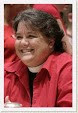
The Rev. Canon Debbie Royals is an Episcopal priest and a member of the Pascua-Yaqui tribe. Listen to how she understands these two cultures forming a single spirituality.
Friday, February 15, 2019

Thursday, March 1, 2018
Contagious!
I had a wonderful Sunday a few weeks ago at St. Francis Episcopal Church in Green Valley, AZ. Their congregation is a supporter of Imago Dei Middle School, where I am serving as chaplain. Our work with low income students demands that we seek solutions to the larger economic issues that their families face. I think Jesus would support those efforts!
(I recorded this after the fact in the school chapel, so imagine congregation noise in the background!)
(I recorded this after the fact in the school chapel, so imagine congregation noise in the background!)
Wednesday, February 3, 2016
Heavenly Marriage Feast
I had a good time at St. Thomas of Canterbury Episcopal Church in Albuquerque last month. It happened to be the Sunday after the Anglican Primates sought to reprimand the Episcopal Church for embracing marriage equality. I thought the lessons were a perfect response.
Sunday, September 20, 2015
Transfigured for Justice
I supplied at Covenant Presbyterian Church in Albuquerque on August 9th. I used the lessons for the Feast of the Transfiguration, because they're too good to miss! Exodus 34:29-35, 2 Peter 1:13-21, and Luke 9:28-36
Sunday, August 16, 2015
The Poor will be Raised up
I'm trying something new, and trying it out here. My job as the Executive Director of the New Mexico Conference of Churches means I don't preach every week. But I can't help thinking about what I would say about various lessons. So, I'm trying podcasting. I've thought about this for a long time. I'm not sure I've figured out what is worth posting and listening to, so expect a variety of things. Let me know if there's something you really like - I'll try to do more of it.
I hope to post conversations with people I like and admire. And I expect there will be a fair amount of politics. I'm doing this on my own time with my own resources. That means I'm free to say what I want, what I think needs to be said. Many preachers are shy about politics because they don't want to offend the people who pay their salary. Churches' tax exempt status means that they can't support particular political candidates or parties. I don't have either of those constraints, so look out!
My first attempt comes on August 15th, the Feast of St. Mary the Virgin. So here are a few thoughts. Be patient as I get better using the technology!
I hope to post conversations with people I like and admire. And I expect there will be a fair amount of politics. I'm doing this on my own time with my own resources. That means I'm free to say what I want, what I think needs to be said. Many preachers are shy about politics because they don't want to offend the people who pay their salary. Churches' tax exempt status means that they can't support particular political candidates or parties. I don't have either of those constraints, so look out!
My first attempt comes on August 15th, the Feast of St. Mary the Virgin. So here are a few thoughts. Be patient as I get better using the technology!
Tuesday, May 14, 2013
Maroc, continued
One of the best parts of our trip across Morocco was our guide, Omar. He's led Semester at Sea trips before, though most of the time he leads small private tours for diplomats, CEOs and the like. The morning after the camel trek, back in Marrakech, Omar offered to lead a cultural tour through the medina. A small group of people took him up on it which made for a great experience.
He took us to the oldest part of the medina, or old city, to meet some traditional artisans. The first was a 13th century wood carvers shop, where a man used his hands and feet to operate a lathe on the ground and turn tiny dowels into delicate beads and rings. We saw a traditional community bakery still in operation, because the bread tastes better baked this way, Omar said.

The highlight of the morning was the rug coop. This establishment markets rugs from all over the country. We were warmly welcomed and invited to take seats around the enclosed courtyard, where the show began. One man began to tell us about how the rugs were made as others dramatically pulled rolled up carpets from the stacks surrounding them and unrolled them with a flourish.
The speaker identified the tribe that made each rug and pointed out the features unique to that tribe's style. It was fun to see who gravitated toward which rugs. We all had different favorites. After the show, we were encouraged to wander around the towering stacks and choose the rug we wanted. At one point, as I was looking at a rug I liked and trying to calculate the exchange rate of Dollars to Dirham, the salesman said, "don't look with your eyes, but your heart!" I heard others ask, "which one do you love?" It's a good technique. It also illustrated the real value of the rugs. The actual cost of the rugs was pretty dear, too. With Omar's help I was able to get a small rectangular rug made in two styles - flat weave and knotted - in muted red and blue. At one point the haggling seemed to be escalating. I told Omar to say I was a poor teacher who could not afford a big price! With that the man in charge said okay, "You deserve it!" And cheered from the balcony over looking the courtyard.
Time was quickly evaporating so Omar hurried us through the medina headed toward an area of souks, or shops, where he trusted the owners to give us good deals. Our passage was slowed by a donkey cart that was having trouble staying on the cobbled road and between the souks. Eventually we wandered into an open area with an aromatic spice shop.

Omar guided us away from the snake charmers and the more garish tourist traps and instead gave us a glimpse into the history of this ancient society and the people who uphold it.
We eventually headed back to Casablanca and its crowded streets and industrial smog. The ship has become home now, and we were all eager to get back to our cabins and wash off the desert. The next morning many of us took off along the coast for a tour of the mosque.
The Hassan II Mosque is named after the late King of Morocco and took about 6 years to build. It claims to be the third largest in the world, behind those in Mecca and Medina. It is a stunning creation that makes the largest Christian cathedrals look quaint. When we first drove past it at the beginning of the week the weather was beautiful and clear, showing off the mosque. The day of our tour was foggy and damp and the top of the mosque itself and its minaret (the tallest in the world) were completely obscured.


The building is an interesting mix of ancient customs and artistry and modern engineering. The wooden ceiling is retractable, like a football arena, and on this morning it was open to air out the mosque. Additionally, there are several large titanium and bronze doors that raise and lower like garage doors, though much bigger and heavier! The building sits right on the coast and extends over the water, recalling the Quran's description that the throne of God was built on the water. Glass doors look out over the sea. Below there is a huge ablutions room for men, and public baths, or hammams, for men and women.

Over 100,000 people can gather at the mosque - about 20,000 inside and the rest in the outside courtyards, among the fountains. At night, a bright green laser points from the top of the minaret toward Mecca, telling everyone in Casa what direction to pray. It is one of the only mosques in Morocco that non-Muslims are permitted to enter, including women. We appreciated the hospitality of the community to allow us to see this magnificent building. It somehow seemed to be both opulent and sparse at the same time. No doubt something made possible by its sheer size.
As we were arriving in Morocco we were aware of the controversy heating up in the States about the man in Florida who was planning to burn Qurans. We realized that we would be traveling on September 11 and we were warned to be careful. At times we experienced a distinct hostility toward us, whether because we were loud Americans, or non-Muslims, or immodestly dressed we did not know. However, on Sept 10, the first day of Eid, when we were in Marrakech, I had a conversation with a shop owner (in French!) about the proposed Quran burning. The shop owner, who was about my age, told me that the Quran is given by God and is something that one lives. To burn a Quran is dumb because the paper is unimportant. We wipe our hands with paper, he said. I agreed with him about how dumb this act is, and said that the Bible too is something that is lived and not merely written down. After the warnings we'd received, I was very grateful for this exchange and some shared understanding. I was also grateful that he was willing to make a distinction between us and the fool in Florida!
Soon we were back on the ship and heading south toward Ghana.
He took us to the oldest part of the medina, or old city, to meet some traditional artisans. The first was a 13th century wood carvers shop, where a man used his hands and feet to operate a lathe on the ground and turn tiny dowels into delicate beads and rings. We saw a traditional community bakery still in operation, because the bread tastes better baked this way, Omar said.

The highlight of the morning was the rug coop. This establishment markets rugs from all over the country. We were warmly welcomed and invited to take seats around the enclosed courtyard, where the show began. One man began to tell us about how the rugs were made as others dramatically pulled rolled up carpets from the stacks surrounding them and unrolled them with a flourish.

The speaker identified the tribe that made each rug and pointed out the features unique to that tribe's style. It was fun to see who gravitated toward which rugs. We all had different favorites. After the show, we were encouraged to wander around the towering stacks and choose the rug we wanted. At one point, as I was looking at a rug I liked and trying to calculate the exchange rate of Dollars to Dirham, the salesman said, "don't look with your eyes, but your heart!" I heard others ask, "which one do you love?" It's a good technique. It also illustrated the real value of the rugs. The actual cost of the rugs was pretty dear, too. With Omar's help I was able to get a small rectangular rug made in two styles - flat weave and knotted - in muted red and blue. At one point the haggling seemed to be escalating. I told Omar to say I was a poor teacher who could not afford a big price! With that the man in charge said okay, "You deserve it!" And cheered from the balcony over looking the courtyard.
Time was quickly evaporating so Omar hurried us through the medina headed toward an area of souks, or shops, where he trusted the owners to give us good deals. Our passage was slowed by a donkey cart that was having trouble staying on the cobbled road and between the souks. Eventually we wandered into an open area with an aromatic spice shop.

Omar guided us away from the snake charmers and the more garish tourist traps and instead gave us a glimpse into the history of this ancient society and the people who uphold it.
We eventually headed back to Casablanca and its crowded streets and industrial smog. The ship has become home now, and we were all eager to get back to our cabins and wash off the desert. The next morning many of us took off along the coast for a tour of the mosque.
The Hassan II Mosque is named after the late King of Morocco and took about 6 years to build. It claims to be the third largest in the world, behind those in Mecca and Medina. It is a stunning creation that makes the largest Christian cathedrals look quaint. When we first drove past it at the beginning of the week the weather was beautiful and clear, showing off the mosque. The day of our tour was foggy and damp and the top of the mosque itself and its minaret (the tallest in the world) were completely obscured.


The building is an interesting mix of ancient customs and artistry and modern engineering. The wooden ceiling is retractable, like a football arena, and on this morning it was open to air out the mosque. Additionally, there are several large titanium and bronze doors that raise and lower like garage doors, though much bigger and heavier! The building sits right on the coast and extends over the water, recalling the Quran's description that the throne of God was built on the water. Glass doors look out over the sea. Below there is a huge ablutions room for men, and public baths, or hammams, for men and women.

Over 100,000 people can gather at the mosque - about 20,000 inside and the rest in the outside courtyards, among the fountains. At night, a bright green laser points from the top of the minaret toward Mecca, telling everyone in Casa what direction to pray. It is one of the only mosques in Morocco that non-Muslims are permitted to enter, including women. We appreciated the hospitality of the community to allow us to see this magnificent building. It somehow seemed to be both opulent and sparse at the same time. No doubt something made possible by its sheer size.
As we were arriving in Morocco we were aware of the controversy heating up in the States about the man in Florida who was planning to burn Qurans. We realized that we would be traveling on September 11 and we were warned to be careful. At times we experienced a distinct hostility toward us, whether because we were loud Americans, or non-Muslims, or immodestly dressed we did not know. However, on Sept 10, the first day of Eid, when we were in Marrakech, I had a conversation with a shop owner (in French!) about the proposed Quran burning. The shop owner, who was about my age, told me that the Quran is given by God and is something that one lives. To burn a Quran is dumb because the paper is unimportant. We wipe our hands with paper, he said. I agreed with him about how dumb this act is, and said that the Bible too is something that is lived and not merely written down. After the warnings we'd received, I was very grateful for this exchange and some shared understanding. I was also grateful that he was willing to make a distinction between us and the fool in Florida!
Soon we were back on the ship and heading south toward Ghana.
Maroc
Morocco was fascinating and befuddling. We docked in the Casablanca port, which unlike Cadiz, is a busy industrial port. It was not beautiful. Rather it was dirty and dusty, on the edge of a city of 5 million people. Casa (as it's called) is the commercial center of Morocco and is not designed for foreign tourists!
We arrived on Sept. 9, the last day of Ramadan, so most things were closed during the day. And because of the nature of Casa, most people on the ship were getting ready to head across the country one way or another. We had a diplomatic briefing by two US Embassy officials who were engaging and patiently answered the many questions about how to find ATM's and how to exchange money, etc., etc. Unlike Cadiz, many people stayed on the ship the first day as we got ready to travel on the 10th.
The 10th was also the first day of Eid-al-Fitr. As my trip was leaving Casa the whole city, it seemed, was streaming home from the magnificent Hassan II mosque. It is the largest mosque in Morocco and one of the largest in the world. More about that later!

From Casa my bus (and the one in front of it) was headed to Marrakech for our first night. Our first stop was in the city square where we were having lunch.

45 students streamed off our tour bus and were instantly accosted by people in traditional dress asking for money in exchange for pictures with them. Several men were draping snakes around unwitting tourists while others coaxed trained monkeys onto their shoulders. The population of Marrakech is 1.5 million, and at any one time there are an additional 1 million tourists there. So these folks knew what they were doing! Some students were delighted, others were not. I protectively herded several as they were trying to pull a few bills out of their money belts as the salesmen eagerly watched. There were also women in traditional Muslim dress with only their eyes visible, catching women's hands and decorated them with henna before the young women even knew what was happening. At that point it was too late for them to say No, and they felt caught and obligated to pay the price the henna artist asked, or demanded. It was a shocking introduction to Moroccan salesmanship! Some students became expect bargainers, others hated the whole experience. I successfully avoided the monkeys, snakes, and henna and waited to shop when our tour guide could help me out with the haggling!
After separating ourselves from the entrepreneurs, we had the first of many wonderful Moroccan meals. We would all sit down while the wait staff brought out the pre-ordered set menu for the 90 people from both tour buses. Each meal began with a plate of cold salad items - strips of pickled carrot, cucumber slices, tomatoes, and sometimes bell pepper slices, avocado, or a lemony cole slaw. The meals are served family style, so each person at the table serves him or herself from the main plate. After the salad plate was whisked a way, a waiter would place a covered tajine in the middle of the table and then dramatically pull the cover off.


This one was a Berber dish of ground lamb in a tomato base, with scrambled egg on top. It was better than it sounds, and than I expected! One student said he wanted to buy a tajine because every time one appeared and the lid was lifted there was something delicious inside. He wondered if it would work like that at home!
The next day we drove about 7 hours across the country toward Zagora near the southern border of Algeria and on the edge of the Sahara desert. The high desert reminded me so much of New Mexico it was eerie. We passed many villages clustered together in the vast landscape. Then we crossed the Atlas Mountains, with breathtaking vistas. And not a little motion sickness. Our bus actually slowed down because of the several people puking. (Not me this time!)

After dark we arrived at the Nomad Camp and were greeted with singing and drumming from a traditional Moroccan musical group (who's name I did not learn.) We were then offered the traditional mint tea and allowed to settle into our tents. Berber carpets formed the center courtyard with 6 person tents situated in rows around the center. The tents were made out of heavy blankets stitched together, with carpets on the floor. The mattresses were better than the beds in the hotel! We had another delicious meal from the magic tajines and then more singing and drumming from the musicians.

We were awoken early the next morning by the braying of donkeys - which I haven't heard since Girl Scout Camp - and whatever you call the sound that camels make! After breakfast (boiled eggs, fruit, & bread) we were put into small groups for the camel trek. The best part of riding a camel is getting on and getting off!

One climbs onto the camel when its on the ground and then hangs on for dear life as it stands up, tipping its rider far backward. Getting off is the same thing in reverse. One hangs on tightly while the camel kneels down on its front knees, tipping the rider far forward. It helps to have a camel herder brace your shoulders! Everything in between is less exciting and less comfortable. I commented that there is a real need for more research and development on camel saddles! They were basically a metal brace the fit over the camel and provided the handlebar, with heavy blankets over it. We all had bruises from sitting on the "saddle." The ride is less rhythmic than a horse - or maybe it's just that a camel sways more in every direction so its harder to stay centered and adjusted. I'd kind of get the hang of it, and then list off to one side or the other and have to get readjusted, all while continuing to sway. I'm so glad I did it, and I probably don't need to do it again! We did learn that Timbuktu was 52 days away by camel. We rode for less than 1 hour and decided Timbuktu would have to wait!

We rode through stands of date palms - some were able to pick some and eat them - and around communities of people who looked at us like the crazy tourists were were. We saw several cars and motorbikes to underscore that point! We also saw lots of children delighted by the spectacle, and a lot of sheep and goats. I understand now why Jesus told a parable about separating them - they run around together and are almost indistinguishable until you get up close.
After the camel trek we had a long drive back to Marrakech, through some different and equally amazing terrain, especially in the middle Atlas.

In the next post - hopefully later today - I'll talk about our cultural shopping tour in Marrakech and the Hassan II mosque in Casablanca.
We arrived on Sept. 9, the last day of Ramadan, so most things were closed during the day. And because of the nature of Casa, most people on the ship were getting ready to head across the country one way or another. We had a diplomatic briefing by two US Embassy officials who were engaging and patiently answered the many questions about how to find ATM's and how to exchange money, etc., etc. Unlike Cadiz, many people stayed on the ship the first day as we got ready to travel on the 10th.
The 10th was also the first day of Eid-al-Fitr. As my trip was leaving Casa the whole city, it seemed, was streaming home from the magnificent Hassan II mosque. It is the largest mosque in Morocco and one of the largest in the world. More about that later!

From Casa my bus (and the one in front of it) was headed to Marrakech for our first night. Our first stop was in the city square where we were having lunch.

45 students streamed off our tour bus and were instantly accosted by people in traditional dress asking for money in exchange for pictures with them. Several men were draping snakes around unwitting tourists while others coaxed trained monkeys onto their shoulders. The population of Marrakech is 1.5 million, and at any one time there are an additional 1 million tourists there. So these folks knew what they were doing! Some students were delighted, others were not. I protectively herded several as they were trying to pull a few bills out of their money belts as the salesmen eagerly watched. There were also women in traditional Muslim dress with only their eyes visible, catching women's hands and decorated them with henna before the young women even knew what was happening. At that point it was too late for them to say No, and they felt caught and obligated to pay the price the henna artist asked, or demanded. It was a shocking introduction to Moroccan salesmanship! Some students became expect bargainers, others hated the whole experience. I successfully avoided the monkeys, snakes, and henna and waited to shop when our tour guide could help me out with the haggling!
After separating ourselves from the entrepreneurs, we had the first of many wonderful Moroccan meals. We would all sit down while the wait staff brought out the pre-ordered set menu for the 90 people from both tour buses. Each meal began with a plate of cold salad items - strips of pickled carrot, cucumber slices, tomatoes, and sometimes bell pepper slices, avocado, or a lemony cole slaw. The meals are served family style, so each person at the table serves him or herself from the main plate. After the salad plate was whisked a way, a waiter would place a covered tajine in the middle of the table and then dramatically pull the cover off.


This one was a Berber dish of ground lamb in a tomato base, with scrambled egg on top. It was better than it sounds, and than I expected! One student said he wanted to buy a tajine because every time one appeared and the lid was lifted there was something delicious inside. He wondered if it would work like that at home!
The next day we drove about 7 hours across the country toward Zagora near the southern border of Algeria and on the edge of the Sahara desert. The high desert reminded me so much of New Mexico it was eerie. We passed many villages clustered together in the vast landscape. Then we crossed the Atlas Mountains, with breathtaking vistas. And not a little motion sickness. Our bus actually slowed down because of the several people puking. (Not me this time!)

After dark we arrived at the Nomad Camp and were greeted with singing and drumming from a traditional Moroccan musical group (who's name I did not learn.) We were then offered the traditional mint tea and allowed to settle into our tents. Berber carpets formed the center courtyard with 6 person tents situated in rows around the center. The tents were made out of heavy blankets stitched together, with carpets on the floor. The mattresses were better than the beds in the hotel! We had another delicious meal from the magic tajines and then more singing and drumming from the musicians.

We were awoken early the next morning by the braying of donkeys - which I haven't heard since Girl Scout Camp - and whatever you call the sound that camels make! After breakfast (boiled eggs, fruit, & bread) we were put into small groups for the camel trek. The best part of riding a camel is getting on and getting off!

One climbs onto the camel when its on the ground and then hangs on for dear life as it stands up, tipping its rider far backward. Getting off is the same thing in reverse. One hangs on tightly while the camel kneels down on its front knees, tipping the rider far forward. It helps to have a camel herder brace your shoulders! Everything in between is less exciting and less comfortable. I commented that there is a real need for more research and development on camel saddles! They were basically a metal brace the fit over the camel and provided the handlebar, with heavy blankets over it. We all had bruises from sitting on the "saddle." The ride is less rhythmic than a horse - or maybe it's just that a camel sways more in every direction so its harder to stay centered and adjusted. I'd kind of get the hang of it, and then list off to one side or the other and have to get readjusted, all while continuing to sway. I'm so glad I did it, and I probably don't need to do it again! We did learn that Timbuktu was 52 days away by camel. We rode for less than 1 hour and decided Timbuktu would have to wait!

We rode through stands of date palms - some were able to pick some and eat them - and around communities of people who looked at us like the crazy tourists were were. We saw several cars and motorbikes to underscore that point! We also saw lots of children delighted by the spectacle, and a lot of sheep and goats. I understand now why Jesus told a parable about separating them - they run around together and are almost indistinguishable until you get up close.
After the camel trek we had a long drive back to Marrakech, through some different and equally amazing terrain, especially in the middle Atlas.

In the next post - hopefully later today - I'll talk about our cultural shopping tour in Marrakech and the Hassan II mosque in Casablanca.
Wednesday, March 9, 2011
Disembarking
I was a terrible travel blogger, I know. Seasickness was a major obstacle to blogging. Even on good days, spending very much time looking at the computer was tough. My job required some computer work, so much more than that and I felt pretty bad - and that was on the good days!
I keep describing the voyage as the strangest combination of extreme highs and lows I've ever experienced. I'm so glad I did it! I doubt I'll be a repeat voyager. Would I recommend it to other student life professionals or students? Depends. Students who are mature and have some interest in and capacity for cross-cultural engagement? Students who are smart and care about other people and the world more than partying? Absolutely.
My student life colleagues were the most talented, exceptional, and fun group of people I know! They were the highlight of the voyage for me. That makes it easy to recommend others apply. The job is tough, though, and was demoralizing at times. I was spoiled at University of the Pacific and I missed the leadership and experience of my Pacific dean and V.P. So I guess the most I can say is I'm ambivalent about recommending it to other professionals. And I'm glad I did it. You probably would be, too!
Thanks to everyone who made a donation to NetsForLife! The campaign continues, so if you want to make a big difference in the world, make a donation of $12 or more.
I keep describing the voyage as the strangest combination of extreme highs and lows I've ever experienced. I'm so glad I did it! I doubt I'll be a repeat voyager. Would I recommend it to other student life professionals or students? Depends. Students who are mature and have some interest in and capacity for cross-cultural engagement? Students who are smart and care about other people and the world more than partying? Absolutely.
My student life colleagues were the most talented, exceptional, and fun group of people I know! They were the highlight of the voyage for me. That makes it easy to recommend others apply. The job is tough, though, and was demoralizing at times. I was spoiled at University of the Pacific and I missed the leadership and experience of my Pacific dean and V.P. So I guess the most I can say is I'm ambivalent about recommending it to other professionals. And I'm glad I did it. You probably would be, too!
Thanks to everyone who made a donation to NetsForLife! The campaign continues, so if you want to make a big difference in the world, make a donation of $12 or more.
Friday, October 29, 2010
Malaria
Here's what I've learned about Malaria, some of it recently when a student became very ill with the disease: There are (at least) three strains of Malaria. Two of them are less dangerous and one can be very serious. In Malaria prone areas, many people develop some natural immunity. I asked about Malaria many times in Ghana and was told that Malaria was no big deal. Adults get it fairly frequently, get miserably sick, and get well. Much like a bad flu, especially with the less severe strains.
People with weakened immune systems, whether from malnutrition or another disease such as HIV, are at greater risk. Those with no immunity to Malaria, such as travelers from non-Malaria regions, and infants and children with little immunity, are also at a much greater risk. This is why the death rates from Malaria are so high among children under 5 years old.
We were also told in Ghana that most people use mosquito nets, at least in the urban areas because that's where there's education about it. In the rural areas, it is less common, and again, where death rates are high.
The education that NetsForLife is doing is very important. Malaria is only carried by mosquitoes, and by mosquitoes that are primarily active at night. One bed net can protect several people and save the lives of children and adults who are real risk of death.
Poverty around the world is rampant. Corruption in government is commonplace and taken for granted by many. War is all too familiar. Natural disaster - like the Tsunami and volcanic eruption that struck Indonesia this week - is unavoidable. Malaria deaths are one problem that can be interrupted.
Please make a donation to NetsForLife if you haven't already. This month your donation will be matched 100%, doubling it's impact.
Just $12 will buy a net and perhaps save a whole family the terrible grief of losing a child.
People with weakened immune systems, whether from malnutrition or another disease such as HIV, are at greater risk. Those with no immunity to Malaria, such as travelers from non-Malaria regions, and infants and children with little immunity, are also at a much greater risk. This is why the death rates from Malaria are so high among children under 5 years old.
We were also told in Ghana that most people use mosquito nets, at least in the urban areas because that's where there's education about it. In the rural areas, it is less common, and again, where death rates are high.
The education that NetsForLife is doing is very important. Malaria is only carried by mosquitoes, and by mosquitoes that are primarily active at night. One bed net can protect several people and save the lives of children and adults who are real risk of death.
Poverty around the world is rampant. Corruption in government is commonplace and taken for granted by many. War is all too familiar. Natural disaster - like the Tsunami and volcanic eruption that struck Indonesia this week - is unavoidable. Malaria deaths are one problem that can be interrupted.
Please make a donation to NetsForLife if you haven't already. This month your donation will be matched 100%, doubling it's impact.
Just $12 will buy a net and perhaps save a whole family the terrible grief of losing a child.
Wednesday, October 20, 2010
Still Sailing!
I know, I know! I'm way overdo on posts! More are coming soon. I'm managing to keep sea sickness to a low hum when we're at sea. But reading and writing is often unpleasant, and our time in port is PACKED! So I'm behind. We arrive in India tomorrow morning. The best part of this is that we will have several weeks of very short sea passages between ports - which is good for sea sickness.
I just saw a new e-mail from ERD announcing that ALL donations to NetsforLife between now and Nov 30 will be matched by a generous donor. SO if you haven't made your donation, yet, now's the time!
More pictures and stories soon!
I just saw a new e-mail from ERD announcing that ALL donations to NetsforLife between now and Nov 30 will be matched by a generous donor. SO if you haven't made your donation, yet, now's the time!
More pictures and stories soon!
Saturday, September 18, 2010
Espana!
The ocean is as smooth as glass today and it feels like the tropics outside. Inside it’s freezing, thanks to the powerful AC system! I apologize for the long delay in posting. We went straight from Spain to Morocco and then back into classes and programs as we head south along the western coast of Africa.
I know words are inadequate to convey all we've seen in just a few short weeks, so I'm hoping I'll be able to upload enough pictures to tell the story.

Our first port was Cadiz, Spain, on the southern tip near Gibraltar. It was once the departure point for ships headed to the New World. Today it is a quiet coastal town with beautiful beaches, a dizzying maze of narrow, winding streets, and an ancient cathedral that served as our hub, thanks to the open plaza and free wi-fi!

Jerez de la Frontera is further South, so hotter and more deeply committed to the custom of Siesta! We wandered along the modern pedestrian mall, had lunch in an outdoor cafe, and then found the Alcazar - a former Moorish, then Spanish castle. The oil press in the Alcazar was one of the most amazing things I've ever seen! It was SO huge!

Seville was stunningly beautiful!

I don't have a picture of the Alcazar that does justice to the amazing tile and stucco work. I could imagine a royal family living in the castle, walking through the hallways, and escaping the heat in these courtyards situated around flowing water channels. It was like being inside a novel.

The cathedral in Seville was utterly overwhelming! I've never seen so much gilt in one place. I think I may have a better understanding of why the Protestant Reformers so eagerly removed all decoration from churches. This is a little over the top for my taste! Though I hear it's glorious at the Easter Vigil when the lights all come on and a dove flies down from the rafters in front of the golden reredos!

The next post will be about Morocco and our stay in a nomad camp on the edge of the Sahara.
Thank you to everyone who has made a donation to NetsForLife We are headed to Ghana and I am very aware of those who struggle to keep their families safe and healthy. It can all be undone by something as simple as a mosquito bite. That bite, and the potentially deadly disease of Malaria can be so easily prevented. $12 buys an insecticide treated need and provides education and awareness to communities at risk. Consider buying a net or two, or making a pledge for each nautical mile we're sailing. Go to NetsForLifeAfrica to make your donation. Put "Nets at Sea" in the business line to join our campaign!
I know words are inadequate to convey all we've seen in just a few short weeks, so I'm hoping I'll be able to upload enough pictures to tell the story.

Our first port was Cadiz, Spain, on the southern tip near Gibraltar. It was once the departure point for ships headed to the New World. Today it is a quiet coastal town with beautiful beaches, a dizzying maze of narrow, winding streets, and an ancient cathedral that served as our hub, thanks to the open plaza and free wi-fi!

Jerez de la Frontera is further South, so hotter and more deeply committed to the custom of Siesta! We wandered along the modern pedestrian mall, had lunch in an outdoor cafe, and then found the Alcazar - a former Moorish, then Spanish castle. The oil press in the Alcazar was one of the most amazing things I've ever seen! It was SO huge!

Seville was stunningly beautiful!

I don't have a picture of the Alcazar that does justice to the amazing tile and stucco work. I could imagine a royal family living in the castle, walking through the hallways, and escaping the heat in these courtyards situated around flowing water channels. It was like being inside a novel.

The cathedral in Seville was utterly overwhelming! I've never seen so much gilt in one place. I think I may have a better understanding of why the Protestant Reformers so eagerly removed all decoration from churches. This is a little over the top for my taste! Though I hear it's glorious at the Easter Vigil when the lights all come on and a dove flies down from the rafters in front of the golden reredos!

The next post will be about Morocco and our stay in a nomad camp on the edge of the Sahara.
Thank you to everyone who has made a donation to NetsForLife We are headed to Ghana and I am very aware of those who struggle to keep their families safe and healthy. It can all be undone by something as simple as a mosquito bite. That bite, and the potentially deadly disease of Malaria can be so easily prevented. $12 buys an insecticide treated need and provides education and awareness to communities at risk. Consider buying a net or two, or making a pledge for each nautical mile we're sailing. Go to NetsForLifeAfrica to make your donation. Put "Nets at Sea" in the business line to join our campaign!
Wednesday, August 25, 2010
Seasickness, Getting lost, and Getting ready
The seas have been rough! Our first morning out many faculty & staff were sick - including me - in spite of meds. We were assured that most people adjust, and we seem to be. More people are making it to meetings now and look less like zombies. Seasick meeds are free & the doc is carrying them around in his pockets! The sensation of continually rocking is strange - like a balance ball the I can't control & is never still.
The ship is confusing & labrythine! Wandering the halls trying to find which elevator goes to a particular deck or where a room is, is common. I keep getting half way down a hallway and then turning around to go the other direction. Despite all the rocking, it's surprisingly difficult to know which direction we're moving and where the front of the ship is from the lower decks.
While fighting seasickness, we've also been trying to get ready for the students, who begin arriving tonight. There have been a lot of long meetings about procederes, etc. We had a lifeboat dril before we sailed the first night. And we're trying to learn what our jobs are on tris floating campus.
We arrived in Halifax this morning, though it's too foggy to see anything. It was a surprising relief when the engines stopped! We have meetings onboard most of the day, but will hopefully have some time in port this evening. If nothing else, we need to stock up on snacks, now that we know wat we can and can't get onboard and how expensive it is!
The NetsForLife camping is growing! We have another $140 dollars from members of St. Anne's in Stockton!
We'll start counting nautical miles tomorrow evening when we sail from Halifax and begin the (rocky) passage across the Atlantic to Spain.
If you want to join the campaign, leave a comment. You don't need to leave the amount if you don't wat to. But be sure to go to NetsForLifeAfrica.org and make your donation. You can place "Nets at Sea" in the business line!
The ship is confusing & labrythine! Wandering the halls trying to find which elevator goes to a particular deck or where a room is, is common. I keep getting half way down a hallway and then turning around to go the other direction. Despite all the rocking, it's surprisingly difficult to know which direction we're moving and where the front of the ship is from the lower decks.
While fighting seasickness, we've also been trying to get ready for the students, who begin arriving tonight. There have been a lot of long meetings about procederes, etc. We had a lifeboat dril before we sailed the first night. And we're trying to learn what our jobs are on tris floating campus.
We arrived in Halifax this morning, though it's too foggy to see anything. It was a surprising relief when the engines stopped! We have meetings onboard most of the day, but will hopefully have some time in port this evening. If nothing else, we need to stock up on snacks, now that we know wat we can and can't get onboard and how expensive it is!
The NetsForLife camping is growing! We have another $140 dollars from members of St. Anne's in Stockton!
We'll start counting nautical miles tomorrow evening when we sail from Halifax and begin the (rocky) passage across the Atlantic to Spain.
If you want to join the campaign, leave a comment. You don't need to leave the amount if you don't wat to. But be sure to go to NetsForLifeAfrica.org and make your donation. You can place "Nets at Sea" in the business line!
Tuesday, July 20, 2010
Traveling with a Purpose

In 3 weeks and 2 days I will leave Stockton to head to Virginia (via Houston) for Semester at Sea! I'm spending August through December traveling around the world as a residence life staff member and coordinator of religious & spiritual life for 650 college students from across the country. We will visit 11 countries (not counting the US) over 108 days. It's going to be amazing and I'm so excited I can hardly stand it!
I love to travel and this is a dream trip. I don't want it to be only about my having a good time, though. I've been thinking a lot about the places we'll be and what our visit might mean to the people we'll meet. As a scholar and practitioner of mission I'm hoping to learn a lot about how to respond to the disparities between rich and poor in more effective ways. I don't want to wait until I get back, though. I can't carry medical supplies or cases of Plumpy'nut. But I know that I can take you - at least virtually! So, starting today I am collecting pledges of donations to NetsforLife based on the number of nautical miles we sail.
NetsForLife is a program of Episcopal Relief & Development and a host of other partners that is working to prevent malaria in Africa, largely by providing mosquito nets to people who don't have them - much less the anti-malarial medications I'll be taking. It's an easy fix for a disease that kills a million people every year - most of them under the age of 5.
Our voyage will be about 21,000 nautical miles. A pledge of 1 cent per mile for the whole voyage would amount to $210. So, start thinking about what you can pledge! During the voyage I'll post our progress in the box on the right and we can watch the pledges grow - for the whole voyage or portions of it between ports of call. If you're ready to pledge now, say so in the comments section and encourage others to do the same. I'm going to pledge 1 cent per nautical mile for the whole voyage. Who wants to match it?!
Sunday, January 17, 2010
An Appeal for Haiti from the Sisters of St. Margaret
The Episcopal Church and the Sisters of St. Margaret (an Episcopal religious community) have concentrated on helping all the faithful in Haiti since 1927. The Sisters run programs with the elderly and do work with the poor people throught the area. They also are involved at two schools the order founded, one specifically for the handicapped and the other for children within the neighborhood.
The Sisters of Saint Margaret’s mission in Haiti has never been more needed.
The most recent news received is that Sisters Marie Margaret Fenelon, Marjorie Raphael Wysong, and Marie Therese Milien are alive. They have lost their convent, but are committed to continuing their mission of working iwth the elderly, poor, indigent, and young.
Your urgent support is greatly needed. An unfathomable catastrophe like this in a place that has already known so much hardship is a true tragedy. We are asking for your prayers, donations, and service.
Faithfully yours,
Carolyn H. Darr, SSM Superior
Adele Marie Ryan, SSM Asst. Superior
Donations to the Society of St. Margaret may be made online. Please send donations by mail to: The Society of St. Margaret, 17 Highland Park St., Boston, MA 02119-1436. For updates and more information about the Sisters’ work in Haiti, go to ssmbos.org
The Sisters of St. Margaret are an Episcopal Religious Order of women called to glorify God and proclaim the gospel of Jesus Christ through our worship and work, prayer and common life. Their commitment to God and to one another is expressed through vows of poverty, celibate chastity and obedience. The Sisters maintain a presence in Haiti, and the three working there have been accounted for. They are staying in a tent on the football field at College St. Pierre (which was heavily damaged). Above is a picture of the convent before the earthquake.
The Sisters of Saint Margaret’s mission in Haiti has never been more needed.
The most recent news received is that Sisters Marie Margaret Fenelon, Marjorie Raphael Wysong, and Marie Therese Milien are alive. They have lost their convent, but are committed to continuing their mission of working iwth the elderly, poor, indigent, and young.
Your urgent support is greatly needed. An unfathomable catastrophe like this in a place that has already known so much hardship is a true tragedy. We are asking for your prayers, donations, and service.
Faithfully yours,
Carolyn H. Darr, SSM Superior
Adele Marie Ryan, SSM Asst. Superior
Donations to the Society of St. Margaret may be made online. Please send donations by mail to: The Society of St. Margaret, 17 Highland Park St., Boston, MA 02119-1436. For updates and more information about the Sisters’ work in Haiti, go to ssmbos.org
The Sisters of St. Margaret are an Episcopal Religious Order of women called to glorify God and proclaim the gospel of Jesus Christ through our worship and work, prayer and common life. Their commitment to God and to one another is expressed through vows of poverty, celibate chastity and obedience. The Sisters maintain a presence in Haiti, and the three working there have been accounted for. They are staying in a tent on the football field at College St. Pierre (which was heavily damaged). Above is a picture of the convent before the earthquake.
Friday, January 15, 2010
Update
We heard yesterday that the children from St. Vincent's are safe. And there are reports that the school was not as damaged as first reported. The sisters are unsure which reports to trust. The women from the Foyer, the sisters' home for the elderly indigent are safe. Several of them are with the sisters at the fields of a nearby college. They have food and water. It is too dangerous to be inside the damaged buildings as aftershocks continue. It sounds like all of Port au Prince is living and sleeping outdoors.
Continue to pray. And give all that you can.

Continue to pray. And give all that you can.

Wednesday, January 13, 2010
Episcopal Relief and Development
I have spent much of the day frightened and grief struck over the devastation in Haiti. The entire Episcopal compound around the cathedral was destroyed, including the convent of the Society of St. Margaret. I was a postulant at St. Margaret's in Boston ten years ago, and I know two of the three sisters in Haiti, who are miraculously alive and uninjured. There are still hundreds of children from St. Vincent's School for Disabled Children and Holy Trinity School, both started by the sisters, unaccounted for. Haiti is a diocese of the Episcopal Church. These are our neighbors as truly as the people who live on my street. They are our own.
Pray for the people of Haiti. And give what you can. At this moment every dollar will be needed. Episcopal Relief and Development works through local diocesan leadership and has a strong relief infrastructure in Haiti. They have already provided money for Haiti and are prepared to be there indefinitely. Because of the support they receive from the Episcopal Church, 92% of every dollar given will go to Haiti.
Pray for the people of Haiti. And give what you can. At this moment every dollar will be needed. Episcopal Relief and Development works through local diocesan leadership and has a strong relief infrastructure in Haiti. They have already provided money for Haiti and are prepared to be there indefinitely. Because of the support they receive from the Episcopal Church, 92% of every dollar given will go to Haiti.
Saturday, December 12, 2009
A cop, a rabbi, and a dog were in Montana...
This is too good not to share!
Andrew Gerns at The Lead, found this for the first full day of Hanukkah:
The full story is from the New York Times.
Andrew Gerns at The Lead, found this for the first full day of Hanukkah:
Did you hear the one about the Montana cop, the rabbi and the dog who speaks Hebrew?
Eric Stern describes what happens next:
In Montana, a rabbi is an unusual sight. So when a Hasidic one walked into the State Capitol last December, with his long beard, black hat and long black coat, a police officer grabbed his bomb-sniffing German shepherd and went to ask the exotic visitor a few questions....
...Hanukkah has a special significance in Montana these days. In Billings in 1993, vandals broke windows in homes that were displaying menorahs. In a response organized by local church leaders, more than 10,000 of the city’s residents and shopkeepers put make-shift menorahs in their own windows, to protect the city’s three dozen or so Jewish families. The vandalism stopped....
...The menorah was lighted and Hebrew prayers chanted, while the officer watched from a distance with his dog. He figured he would let it all go down and then move in when the ceremony was done. The dog sat at attention, watching the ceremony with a peculiar expression on its face, a look of intense interest. When the ceremony was over, the officer approached the Hasidic rabbi.
“I’m Officer John Fosket of the Helena Police,” he said. “This is Miky, our security dog. Do you mind if I ask you a few questions?”
Miky (pronounced Mikey) is a surplus police dog trained by the Israel Defense Force to sniff for explosives and was purchased by the State of Montana for the price of a plane ticket and a crate. Fosket was handed a card with phrases like like “Hi’ sha’ er” (stay!), Ch’pess (search!), and “Kelev tov” (good doggy)" but all too often Miky would stare at Fosket waiting for a command that made sense.
But with the help of Rabbi Chaim Bruk, Officer Fosket has learned to pronounce the tricky Israeli “ch” sound, and Miky has become a top dog, even working with the Secret Service when the President came to town.
"So all is well in the Jewish community here," Stern says. "Because the Hasidic rabbi is helping the Montana cop speak Hebrew to his dog."
The full story is from the New York Times.
Wednesday, December 9, 2009
Happy Holidays!
Wow, I have been a bad blogger lately!
Things are winding down for the semester here at Pacific. Students are furiously working to get their final papers and assignments done and they're studying like they haven't all semester before final exams next week. So, things are pretty quiet in my neighborhood - apart from a few holiday parties.
I've been thinking a lot about how we celebrate the holidays as a community. We worked really hard this year to make our Festival of Lights celebration more inclusive, and to make the decorations in the university center more resonant for everyone - not just those who celebrate Christmas.
There's always some backlash to this. People who say things like, "most of us DO celebrate Christmas." Or, "that's just political correctness." I always find this surprising, especially when it comes from people who I know really do care about other people, regardless of their religious or cultural background. And this is nothing compared to the ridiculous boycotting of companies that dare to recognize that not all people are Christians, or the TV drama about "attacks on Christmas!" As if! The attack is that materialism has taken over the holiday, not that it threatens to take over others, too.
Saying "Happy Holidays" or "Seasons Greetings" and putting a menorah in the window as well as a Christmas tree (or instead of!) aren't about being "PC." They're about respecting the dignity of every human being, which is something that Episcopalians promise to do every time we baptize a child or renew our own baptismal vows. Respecting other people is something that people of all faiths ought to be able to get behind. As a Christian, I can say that Christians CERTAINLY ought to be able to get behind it!
In the spirit of Christmas, let's us Christians not try to shove our religion down other people's throats. Let's trust that the creator of the universe is at work, and that we are better participants in that work when we are examples of love and hospitality, not hostility. Let's honor those who celebrate Hanukkah, Yule, and Kwanzaa, and those who have already celebrate Eid and Diwali this year.
If you're a Christian and you want to share your holiday traditions with others, invite them to your home to share your holiday meal and celebration, or to Christmas worship. (You will be going to worship, right?! I mean, if you're one of those who is all worked up about "Merry Christmas" you better be putting your money where your mouth is and showing up for church on Christmas eve or Christmas morning!)
If the Gap can 'get it' surely the rest of us can too! For them it's good business. For the rest of us, it's Peace on Earth, Goodwill toward ALL people.
Things are winding down for the semester here at Pacific. Students are furiously working to get their final papers and assignments done and they're studying like they haven't all semester before final exams next week. So, things are pretty quiet in my neighborhood - apart from a few holiday parties.
I've been thinking a lot about how we celebrate the holidays as a community. We worked really hard this year to make our Festival of Lights celebration more inclusive, and to make the decorations in the university center more resonant for everyone - not just those who celebrate Christmas.
There's always some backlash to this. People who say things like, "most of us DO celebrate Christmas." Or, "that's just political correctness." I always find this surprising, especially when it comes from people who I know really do care about other people, regardless of their religious or cultural background. And this is nothing compared to the ridiculous boycotting of companies that dare to recognize that not all people are Christians, or the TV drama about "attacks on Christmas!" As if! The attack is that materialism has taken over the holiday, not that it threatens to take over others, too.
Saying "Happy Holidays" or "Seasons Greetings" and putting a menorah in the window as well as a Christmas tree (or instead of!) aren't about being "PC." They're about respecting the dignity of every human being, which is something that Episcopalians promise to do every time we baptize a child or renew our own baptismal vows. Respecting other people is something that people of all faiths ought to be able to get behind. As a Christian, I can say that Christians CERTAINLY ought to be able to get behind it!
In the spirit of Christmas, let's us Christians not try to shove our religion down other people's throats. Let's trust that the creator of the universe is at work, and that we are better participants in that work when we are examples of love and hospitality, not hostility. Let's honor those who celebrate Hanukkah, Yule, and Kwanzaa, and those who have already celebrate Eid and Diwali this year.
If you're a Christian and you want to share your holiday traditions with others, invite them to your home to share your holiday meal and celebration, or to Christmas worship. (You will be going to worship, right?! I mean, if you're one of those who is all worked up about "Merry Christmas" you better be putting your money where your mouth is and showing up for church on Christmas eve or Christmas morning!)
If the Gap can 'get it' surely the rest of us can too! For them it's good business. For the rest of us, it's Peace on Earth, Goodwill toward ALL people.
Monday, October 26, 2009
Salty Language!
My friend and colleague, The Rev. Nick Knisely, on Episcopal Cafe, highlighted Presiding Bishop Katharine Jefferts-Schori's sermon last weekend for the Diocese of Kansas' annual convention.
Read the full article from the Topeka Capital-Journal.
It's such an important message!
We people have faith have too often decided that what we have to say, what we believe God has told us to share, is THE most important thing. More important even than respecting the dignity of all people. More important than loving one another. More important than listening to what God is saying to other people.
When Jesus was asked what THE most important thing was, he didn't respond with a statement of belief, he didn't make a pronouncement about who was holy and who wasn't. He said, Love the Lord your God with all your heart, and mind, and soul, and strength. And Love your neighbor as yourself.
That's the most important thing, for Christians and for many other people of faith, as well. Love includes speaking out for the cause of justice. But only if we also love those we're speaking out against. That's a trick that only a very few have been able to pull off.
*The prepared text of the Presiding Bishop's sermon is available at the Episcopal Church's website, though apparently she added some salty language of her own as she preached because some of the above comments are missing.
The Topeka Capital Journal reports on the sermon thus:
"Appropriately salty language, she said, 'can indeed be divinely abrasive signs of God's urgency.'
'Your letters to a member of Congress or to the editor of the local paper or the words you speak in a town meeting can be salt when they challenge a sleepy government or community to pay attention to the needs of hungry children or the unemployed,' she said. 'That is the salt of compassion even though it may feel irritating to those who are invited to wake up to their neighbors' needs and demonstrate compassion.'
Jefferts Schori did urge moderation, saying, 'Like all good gifts, salt can be overused.'
She also applied her salt theme in a different way, saying: 'I heard Fred Phelps and his clan were demonstrating outside our meeting place yesterday, and I heard they were here today, too. I didn't see them.'
'Their message -- their hateful message -- just might embrace enough salt to entomb it,' she said.
The congregation interrupted her with applause before she added 'perhaps like Lot's wife' and noted nuclear waste is buried in salt mines."
Read the full article from the Topeka Capital-Journal.
It's such an important message!
We people have faith have too often decided that what we have to say, what we believe God has told us to share, is THE most important thing. More important even than respecting the dignity of all people. More important than loving one another. More important than listening to what God is saying to other people.
When Jesus was asked what THE most important thing was, he didn't respond with a statement of belief, he didn't make a pronouncement about who was holy and who wasn't. He said, Love the Lord your God with all your heart, and mind, and soul, and strength. And Love your neighbor as yourself.
That's the most important thing, for Christians and for many other people of faith, as well. Love includes speaking out for the cause of justice. But only if we also love those we're speaking out against. That's a trick that only a very few have been able to pull off.
*The prepared text of the Presiding Bishop's sermon is available at the Episcopal Church's website, though apparently she added some salty language of her own as she preached because some of the above comments are missing.
Subscribe to:
Posts (Atom)